
ATEX, IECEx, and PESO Certifications: A Guide for Hazardous Area Motor Buyers
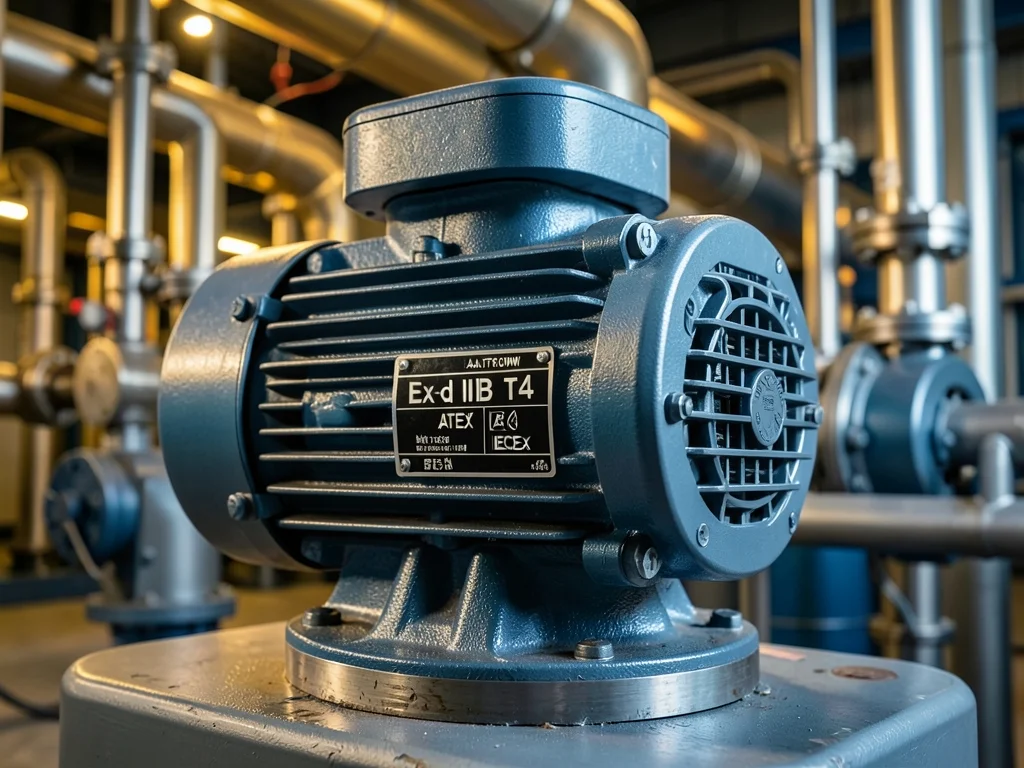
ATEX, IECEx, and PESO Certifications: A Guide for Hazardous Area Motor Buyers
Motors installed in oil refineries, chemical plants, paint manufacturing, grain handling, and similar industries must be specifically certified for the hazardous atmosphere they will operate in. The certification system can be confusing because it involves multiple international and national bodies. This guide explains ATEX, IECEx, and PESO certifications — the three you encounter most in India — and how to specify the correct motor.
1. Why Hazardous Area Certification Matters
An ordinary motor in a flammable gas or dust environment can ignite the atmosphere through:
- A spark from a worn brush or arc inside the motor terminal box
- A hot surface exceeding the ignition temperature of the surrounding atmosphere
- An internal arc from a burnout escaping the housing
Certified Ex-rated motors are engineered to prevent these ignition sources or contain any internal ignition. Use of non-certified motors in classified areas is a safety crime in India and most countries.
2. Area Classification — Zones
Hazardous areas are classified by likelihood of explosive atmosphere:
- Zone 0: Explosive gas present continuously (inside fuel tanks)
- Zone 1: Explosive gas likely during normal operation (process areas)
- Zone 2: Explosive gas unlikely, brief if at all (well-ventilated process areas)
- Zone 20: Explosive dust present continuously (inside cyclone separators)
- Zone 21: Explosive dust likely (around dust handling equipment)
- Zone 22: Explosive dust unlikely (general areas of dust-handling plants)
3. Protection Types (Ex Codes)
The "Ex" symbol on a certified motor is followed by codes indicating the protection technique:
- Ex db (flameproof): Heavy enclosure contains any internal explosion; flame paths cool gas before it escapes. Zone 1.
- Ex eb (increased safety): No internal arcs or sparks under normal operation; reinforced design. Zone 1.
- Ex ec (formerly Ex nA — non-sparking): No arcs or sparks under normal operation; standard industrial construction with extra creepage/clearance. Zone 2 only.
- Ex pz / Ex px (pressurised): Continuous air or inert gas flow prevents flammable atmosphere from entering enclosure. Zone 2 (pz) or Zone 1 (px).
- Ex tb (dust protection): Dust-tight enclosure with restricted surface temperature. Zone 21.
- Ex tc: Lighter dust protection. Zone 22.
4. Gas Groups
The gases the motor must protect against are categorised:
- IIA: Lower-risk gases (propane, butane, ethanol) — most common refineries
- IIB: Medium-risk (ethylene, town gas) — chemical plants
- IIC: Highest-risk (hydrogen, acetylene) — fertilizer plants, hydrogen handling
A motor rated IIC also satisfies IIA and IIB. But a IIA motor cannot be used where hydrogen is present.
5. Temperature Class
The motor's maximum surface temperature must be below the auto-ignition temperature of the surrounding atmosphere:
- T1: 450°C max — most gases
- T2: 300°C — ethanol, propane
- T3: 200°C — petrol
- T4: 135°C — ether, naphtha
- T5: 100°C
- T6: 85°C — carbon disulphide, very volatile fuels
6. The Three Certification Bodies
- ATEX: European Union directive (2014/34/EU). Mandatory in Europe. Recognised globally but not legally required in India.
- IECEx: International electrotechnical commission scheme. Globally recognised, simpler than ATEX. Accepted in India as supporting documentation.
- PESO: Petroleum and Explosives Safety Organisation. India's mandatory regulator for hazardous area equipment. PESO approval is required for use in classified Indian installations.
7. Typical Motor Nameplate Markings
A complete hazardous area motor nameplate carries marking like:
Ex db IIC T4 Gb IP66 — IECEx CSA 18.0024X, PESO P/HQ/MH/22/1234
Interpreting:
- Ex db = flameproof construction
- IIC = suitable for all gas groups including hydrogen
- T4 = surface temperature ≤135°C
- Gb = Equipment Protection Level "b" for Zone 1
- IP66 = dust-tight, protected against heavy water jets
- IECEx CSA 18.0024X = certification body + number; "X" suffix means special conditions for safe use
- PESO P/HQ/... = Indian regulatory approval reference
8. How to Specify
Tell the supplier:
- Zone classification (1, 2, 21, or 22)
- Gas group (IIA, IIB, or IIC)
- Temperature class (T1 to T6)
- Required ingress protection (typically IP55 minimum, IP66 for outdoor)
- PESO approval requirement (mandatory for Indian installations)
- Specific protection type preference (Ex db is most common; Ex eb cheaper for Zone 1; Ex ec cheapest for Zone 2)
9. Documentation You Need
- Manufacturer's certificate of conformity
- IECEx or ATEX certificate copy
- PESO approval letter (Indian installation)
- Routine test certificate for the specific motor (serial-number specific)
- Hazardous area drawing showing zones and selected motor location
Bombay Engineering Syndicate supplies the complete Crompton hazardous area motor range — Ex db, Ex eb, Ex ec, and Ex pz — in both LV and HV ratings, all with current PESO approvals and IECEx certificates. Our application engineers help specify the correct zone, gas group, and protection type for your installation. We coordinate factory acceptance testing, certificate management, and installation support. Contact us for hazardous area motor sizing and compliance documentation.