
Best Motors for the Textile Industry
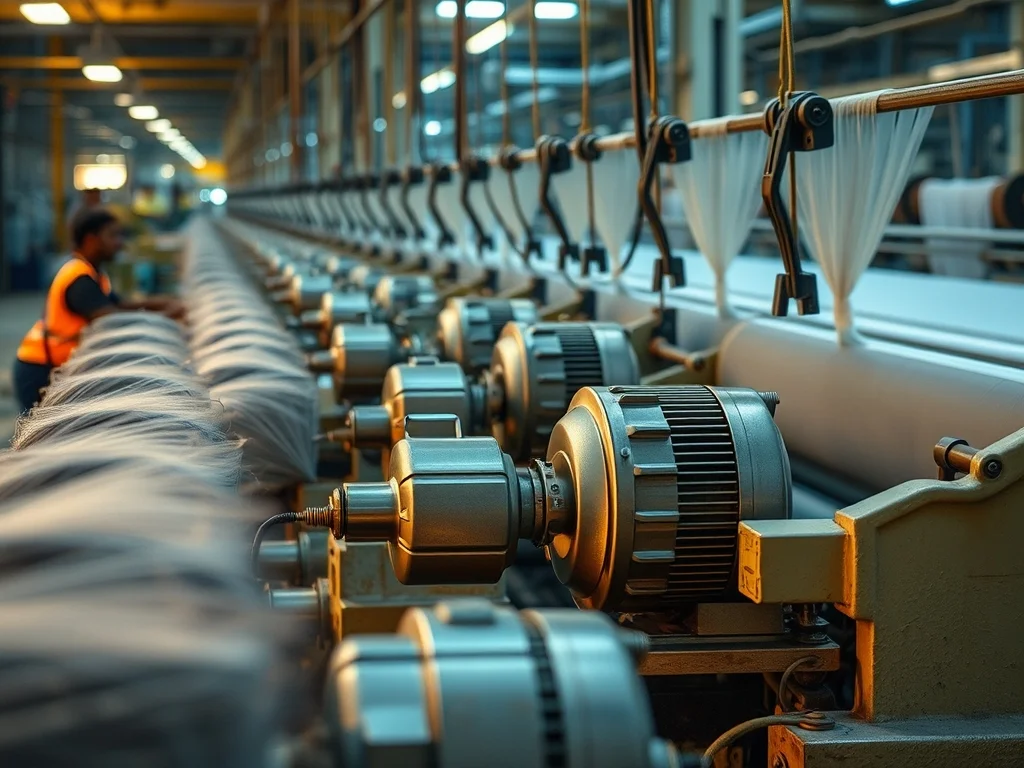
Best Motors for the Textile Industry
The textile industry — concentrated in Gujarat and Maharashtra — places specific demands on electric motors: continuous duty, dusty and humid environments, precise speed for quality, and high energy costs from long running hours. Choosing the right motor directly affects fabric quality and running cost.
1. The Textile Duty Challenge
Textile motors run long hours in lint-laden, humid air. They need good sealing against fibre and dust ingress, reliable cooling despite airborne lint, and consistent speed for uniform yarn and fabric quality.
2. Spinning & Ring Frames
Ring frames and spinning machines need smooth, precise-speed motors — often driven by VFDs for speed control and energy savings. Energy-efficient IE3/IE4 motors pay back quickly given the continuous running.
3. Weaving (Looms)
Looms need motors that handle the cyclic loading of the weaving action reliably. Robust construction and good thermal margin matter for the constant duty.
4. Processing & Finishing
Dyeing, printing, and finishing involve pumps, fans, and drives in hot, humid, sometimes corrosive conditions — where sealed, corrosion-resistant motors last longest.
5. Why Efficiency Matters Most Here
Textile mills run motors thousands of hours a year, so electricity is a major cost. Upgrading to IE3/IE4 motors and adding VFDs on suitable drives cuts the energy bill significantly — often the single biggest saving opportunity in a mill.
6. What We Supply
BES supplies CG/Crompton motors across the textile range — energy-efficient LV motors, VFD-compatible drives, and sealed motors for dusty and humid areas — with application support for Gujarat and Maharashtra textile units.
Running a textile unit? We help specify energy-efficient, textile-duty motors and drives that cut your electricity bill. Contact us or send a motor inquiry for expert guidance from our Mumbai and Ahmedabad teams.