IE4 (Super Premium Efficiency) motors cost more than IE3 (Premium Efficiency) motors. The question every buyer asks: is the extra efficiency worth the extra cost? The answer depends entirely on how many hours the motor runs. Here is the honest math.
1. The Efficiency Difference
IE4 motors are typically 1-2 percentage points more efficient than IE3, depending on rating. That sounds small, but on a motor running thousands of hours a year, it adds up in electricity saved.
2. When IE4 Is Worth It
- High running hours: Motors running 4,000+ hours/year — the energy savings compound quickly
- Large motors: A 1% saving on a 100 kW motor is far more rupees than on a 5 kW motor
- High electricity tariff: The higher your rate, the faster IE4 pays back
3. When IE3 Is the Better Buy
- Low running hours: Standby or intermittent motors — the energy saving is too small to justify the premium
- Small motors on short duty: Payback stretches too long
4. The Payback Calculation
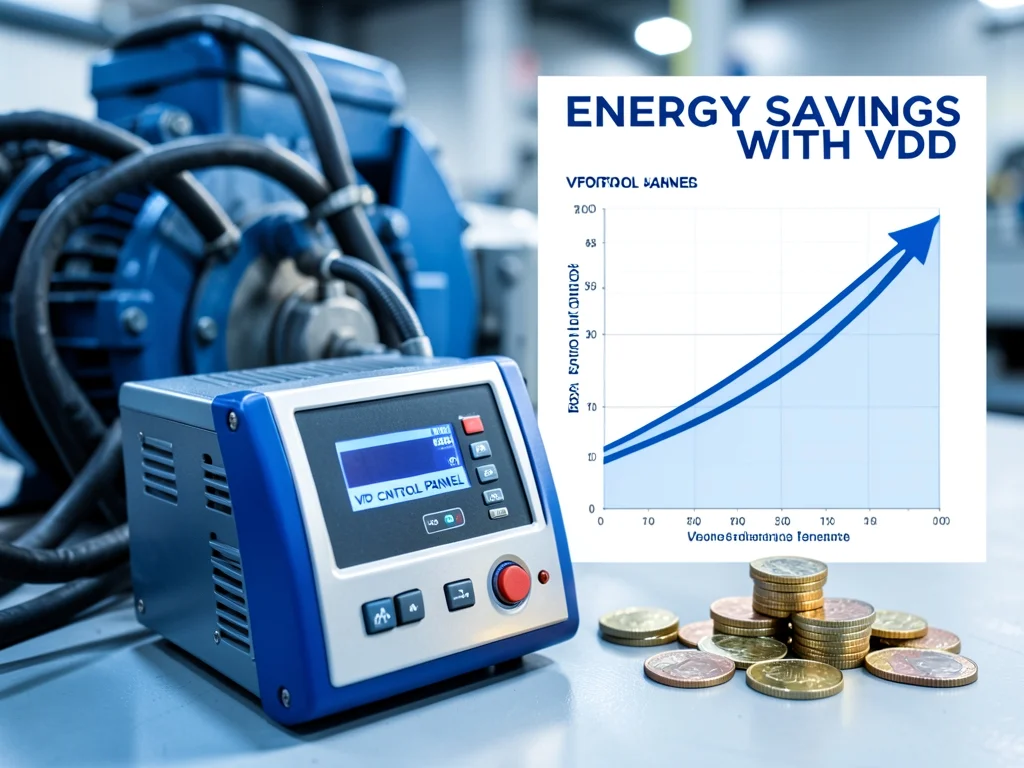
Estimate annual energy saved = motor kW × running hours × efficiency gain. Multiply by your tariff to get rupees saved per year. Divide the price premium by that figure for payback in years. For continuously-running large motors, IE4 often pays back within 1-3 years — then saves for its whole life.
5. Worked Example
Using the IEC 60034-30-1 minimum efficiencies for 4-pole motors, running 6,000 hours a year at full load:
| Rating | IE3 | IE4 | Energy saved by IE4 per year |
|---|
| 7.5 kW | 90.4% | 92.6% | about 1,180 kWh |
| 15 kW | 92.1% | 93.9% | about 1,870 kWh |
| 55 kW | 94.6% | 95.7% | about 4,010 kWh |
| 110 kW | 95.4% | 96.3% | about 6,470 kWh |
Multiply by your tariff to get the yearly value and compare it with the price difference quoted for the two motors. Halve the running hours and the saving halves too. For the efficiency values of every class, see IE1 to IE4 efficiency classes explained.
6. Compliance Angle
Efficiency requirements keep rising: the EU already requires IE4 for 75–200 kW motors, and most new Indian projects and tenders now specify IE3 as the minimum; choosing IE4 future-proofs against tightening regulations and demonstrates energy commitment.
Frequently Asked Questions
What is the difference between IE3 and IE4 motors?
IE4 (super premium) motors have roughly 20–25% lower losses than IE3 (premium) motors of the same rating, which is 1 to 3 percentage points of efficiency depending on size. A 15 kW, 4-pole motor must reach at least 92.1% as IE3 and 93.9% as IE4.
Is an IE4 motor worth it?
It is worth it on motors that run long hours, typically above 4,000 hours a year, and on larger ratings. For standby or occasional-duty motors, IE3 is the better buy.
Is an IE4 motor the same size as an IE3 motor?
Often, but not always. Some IE4 designs are longer or use the next frame size, so check dimensions and mounting before replacing an IE3 motor.
Send us your motor rating, running hours, and tariff and we will calculate whether IE4 pays back for your specific case. Contact us or send a motor inquiry for expert guidance from our Mumbai and Ahmedabad teams.