
Motor Efficiency Classes (IE1 to IE4) Explained
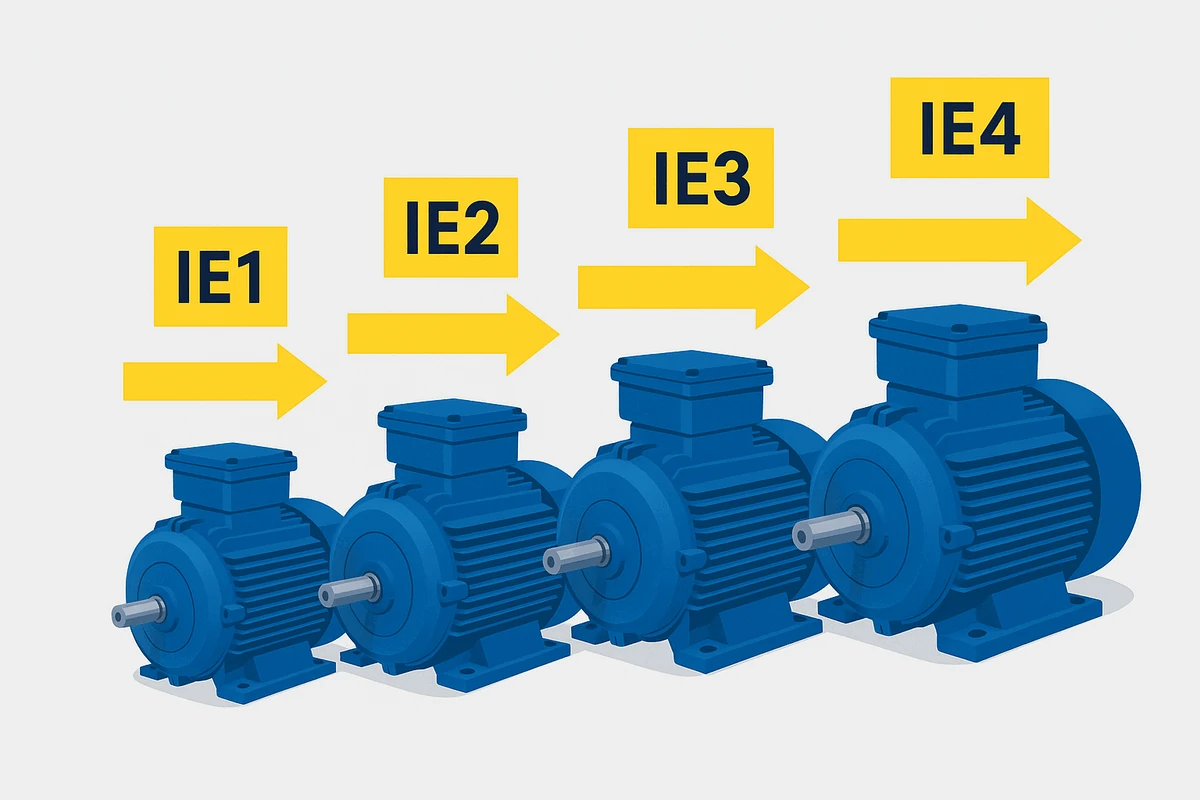
Motor Efficiency Classes (IE1 to IE4) Explained
Motor efficiency standards help industries adopt energy-efficient equipment while meeting global environmental regulations. The International Electrotechnical Commission (IEC) developed the IE classification system to standardize electric motor efficiency levels globally.
1. What Is an IE Efficiency Class?
IE stands for "International Efficiency." The classes are defined by IEC 60034-30-1, which categorizes electric motors based on their energy efficiency. Higher IE class = greater efficiency and energy savings.
- IE1 – Standard Efficiency
- IE2 – High Efficiency
- IE3 – Premium Efficiency
- IE4 – Super Premium Efficiency
2. Efficiency Comparison Table (Indicative %)
| Power (kW) | IE1 | IE2 | IE3 | IE4 |
|---|---|---|---|---|
| 1.1 | 77.4% | 81.4% | 84.1% | 86.1% |
| 7.5 | 88.6% | 90.6% | 92.6% | 94.1% |
| 15 | 90.6% | 92.6% | 93.9% | 95.4% |
| 30 | 91.7% | 93.6% | 95.0% | 96.3% |
*Values are indicative and vary slightly with pole number and voltage.
3. Global Regulatory Mandates
- India: BIS mandates IE2 minimum for new motors since 2018; IE3 becoming common in OEM specs
- EU: IE3 is the minimum standard since 2021
- USA (NEMA): Equivalent to IE3 under EPAct/EISA regulations
4. Long-Term Cost Savings
Even a 2–3% gain in motor efficiency significantly reduces energy bills over the motor’s lifespan. Consider the following:
- A motor's purchase price is typically just 2–5% of its lifetime cost
- Electricity represents ~95% of total cost of ownership
- IE3 or IE4 motors may pay back the price difference in 6–18 months via energy savings
5. Where Do IE3/IE4 Motors Matter Most?
- Continuous-duty applications (pumps, compressors, fans)
- Remote or difficult-to-maintain installations
- Industries with high energy usage: pharma, chemicals, textiles, cement, steel
6. CG Power Motors & Bombay Engineering Syndicate
CG Power offers a comprehensive range of IE2, IE3, and IE4-compliant motors, both standard and flameproof. These motors are available in:
- Frame sizes: 63 to 355
- Power range: 0.37 kW to 355 kW
- Construction: Cast iron or aluminum
- Certifications: BIS, BEE Star Rating, ATEX, CMRI (for flameproof variants)
7. Bombay Engineering Syndicate helps industries transition to energy-efficient systems by:
- Auditing your current motor fleet
- Recommending IE3/IE4 upgrades
- Supplying CG motors with complete technical documentation and compliance support
8. Final Thoughts
Choosing a higher-efficiency motor isn’t just environmentally responsible — it makes strong business sense. Whether you’re designing a new plant or upgrading legacy equipment, IE3 and IE4 motors offer unmatched reliability, compliance, and long-term savings.
Contact us for efficiency audits, motor sizing, and technical support.