
Motor Service Factor Explained: What It Really Means
Motor Service Factor Explained: What It Really Means
Service factor is one of the most misunderstood numbers on a motor nameplate. Getting it wrong leads to either overloaded motors or unnecessary oversizing. Here is what it actually means and how to use it.
1. What Service Factor Is
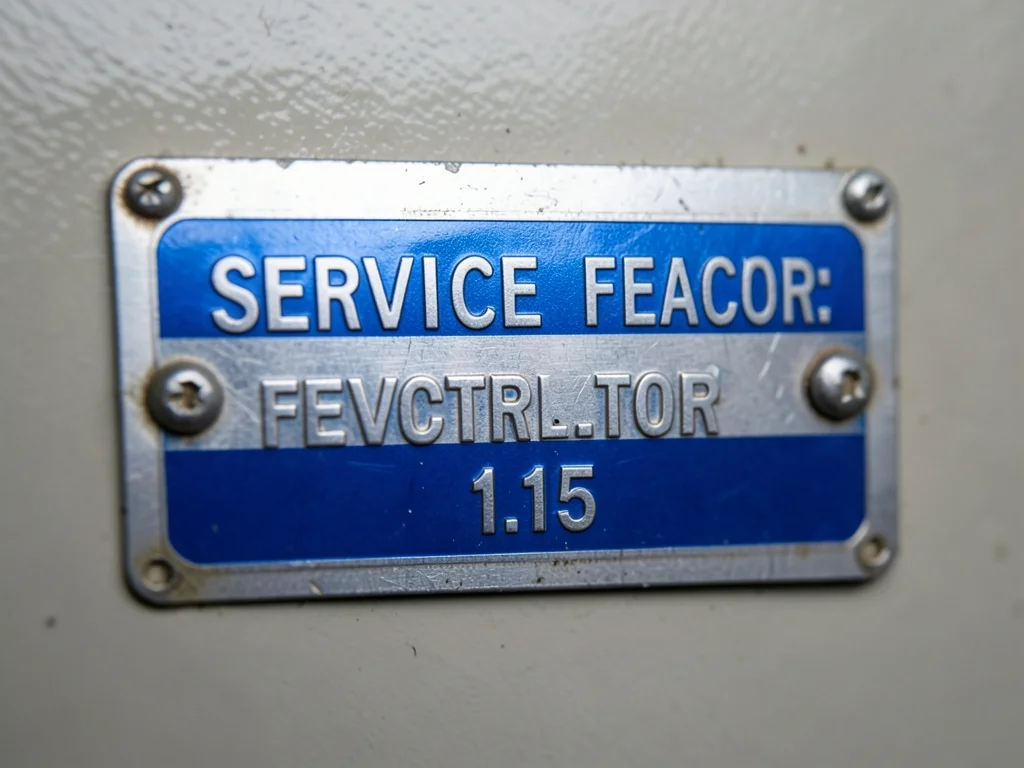
Service factor (SF) is a multiplier showing how much a motor can be safely overloaded on a continuous basis. An SF of 1.15 means the motor can carry 15% more than its rated power continuously without damage — a built-in margin.
2. Common Values
- SF 1.0: No overload margin — the motor is rated exactly at nameplate (common on IEC motors)
- SF 1.15: 15% continuous overload margin (common on NEMA motors)
- Higher SF: Some special motors offer more margin
3. Why It Matters When Sizing
An SF 1.0 motor should not be run above its nameplate rating. An SF 1.15 motor tolerates occasional 15% overload. When replacing a NEMA (SF 1.15) motor with an IEC (SF 1.0) equivalent of the same nameplate power, the IEC motor may be effectively "smaller" for the duty — you may need to upsize.
4. What the Margin Is (and Isn't) For
Service factor is a safety margin for occasional overloads, voltage dips, and load variation — not a licence to permanently run the motor overloaded. Continuous operation into the service factor reduces efficiency and shortens life, even if the motor survives.
5. Practical Guidance
Size the motor so normal operation is within the nameplate rating, treating the service factor as reserve for peaks — not as extra capacity to design around.
Sizing or replacing a motor and unsure about service factor? Our engineers ensure the replacement truly matches your duty. Contact us or send a motor inquiry for expert guidance from our Mumbai and Ahmedabad teams.