
NEMA vs IEC Motor Standards: Key Differences for Indian Users
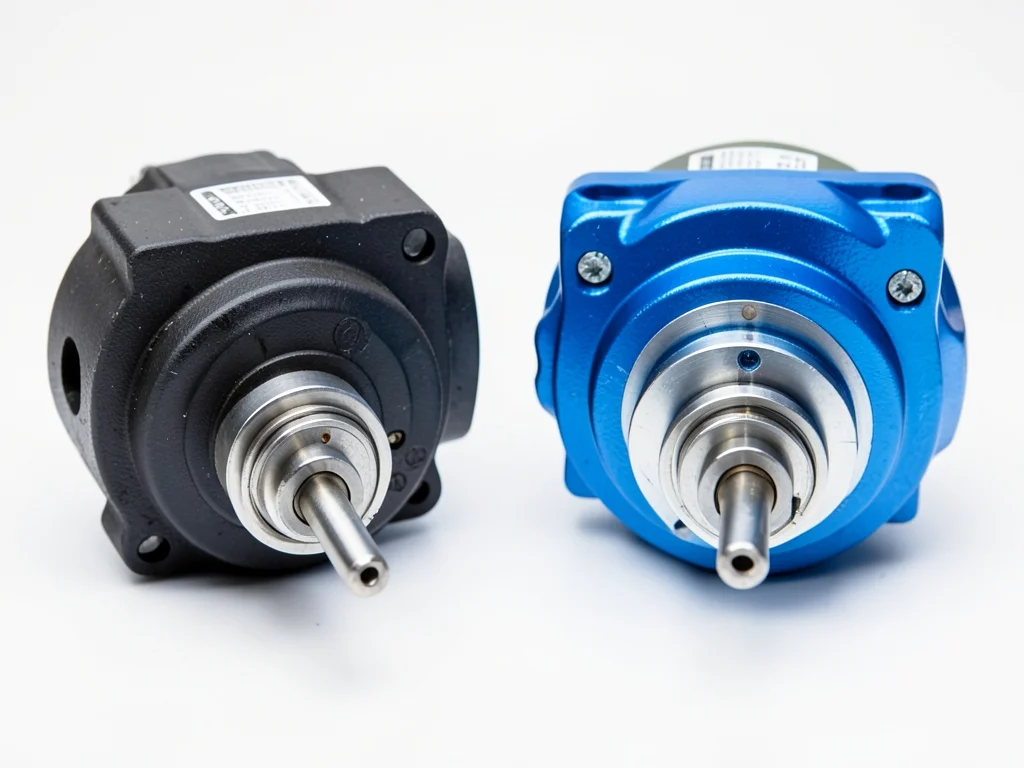
NEMA vs IEC Motor Standards: Key Differences for Indian Users
Two motor standards dominate global industrial markets: NEMA (used in USA, Canada, parts of Latin America) and IEC (used in Europe, India, and most other countries). Indian engineers regularly encounter both — IEC for domestic equipment and NEMA when working with US-origin machinery or for export equipment. This guide breaks down the key differences and explains how to specify the right motor for each context.
1. Standards Bodies and Scope
- NEMA (National Electrical Manufacturers Association): American industrial standard. NEMA MG 1 is the master motor specification. Used for US- and Canada-built equipment.
- IEC (International Electrotechnical Commission): Global standard adopted in 60+ countries including India. IEC 60034 series covers motor design, performance, and testing.
- Indian context: India follows IEC, with BIS adopting IEC standards as IS (e.g., IS 12615 mirrors IEC 60034-30).
2. Frame Size — The Most Visible Difference
NEMA frames use a 2-3 digit code (e.g., 56, 184T, 256T). The first 2 digits give shaft centre height in 1/16" units. So NEMA 56 = 56/16" = 3.5" shaft height.
IEC frames use millimetres (e.g., 80, 132M, 200L). The number is the shaft centre height in mm directly. So IEC 90 means 90 mm shaft height.
Quick conversions of common frames:
- NEMA 56 (3.5") ≈ IEC 80 (80 mm)
- NEMA 143T (3.5") ≈ IEC 90S
- NEMA 184T (4.5") ≈ IEC 100L
- NEMA 254T (6.25") ≈ IEC 160M
- NEMA 364T (9") ≈ IEC 225M
Note: The conversions are approximate. Bolt patterns and shaft dimensions differ — you cannot directly swap a NEMA motor for an IEC frame motor without an adaptor plate.
3. Voltage and Frequency
- NEMA standard voltages: 115/230 V single-phase, 208/230/460/575 V three-phase, 60 Hz
- IEC standard voltages: 230 V single-phase, 400/415/690 V three-phase, 50 Hz (60 Hz in some regions)
A 60 Hz NEMA motor will spin 20% slower on 50 Hz Indian supply (assuming voltage is compatible), and produce 17% less torque due to reduced flux. Conversely, a 50 Hz IEC motor on 60 Hz will spin 20% faster — often acceptable for fans/pumps but problematic for fixed-speed drives.
4. Efficiency Classes
Both standards use efficiency classes, but the values differ slightly:
- NEMA: Energy Efficient (EE), Premium (NEMA Premium), Super Premium
- IEC 60034-30: IE1 (Standard), IE2 (High), IE3 (Premium), IE4 (Super Premium), IE5 (Ultra Premium)
NEMA Premium ≈ IEC IE3. India's BIS labelling mandates IE2 minimum since 2018; IE3 mandatory for general-purpose motors above 0.75 kW from 2024.
5. Mounting Standards
- NEMA: Foot-mounted (rigid base, resilient base), C-flange, C-face, D-flange
- IEC: B3 (foot), B5 (flange-mounted with through-bolts), B14 (face-mounted with tapped holes), B35 (combined foot + B5 flange)
NEMA C-face is similar to IEC B14; NEMA C-flange is similar to IEC B5. Bolt hole patterns and pilot diameters differ — always check before ordering.
6. Insulation Class and Temperature Rise
- NEMA: Classes B (130°C), F (155°C), H (180°C) — same temperature limits as IEC
- IEC: Same Class B, F, H with same temperature limits
- Both standards now commonly specify "Class F insulation with Class B temperature rise" for premium motors — giving thermal headroom
7. Service Factor
This is a key NEMA-vs-IEC difference often missed:
- NEMA motors: Often have service factor 1.15 — meaning the motor can carry 15% overload continuously without damage
- IEC motors: Standard service factor 1.00 — the motor is rated exactly at its nameplate
This is why direct replacement of a NEMA motor with an IEC equivalent of the same kW rating may underperform — you need to upsize the IEC motor.
8. When to Use Which
- Building or maintaining US-origin equipment: use NEMA
- Building equipment for export to USA: use NEMA
- Indian domestic and most industrial use: IEC
- OEM equipment built for global markets: IEC (more universally accepted)
Bombay Engineering Syndicate stocks both Crompton NEMA-frame motors (for OEMs serving export markets) and the full IEC range (for domestic applications). Our team helps cross-reference between NEMA and IEC equivalents, advises on conversion plates and mounting kits, and supports import/replacement projects. Contact us for application sizing and standards consultation.