
NPSH (Net Positive Suction Head) Explained — Why Your Pump is Cavitating
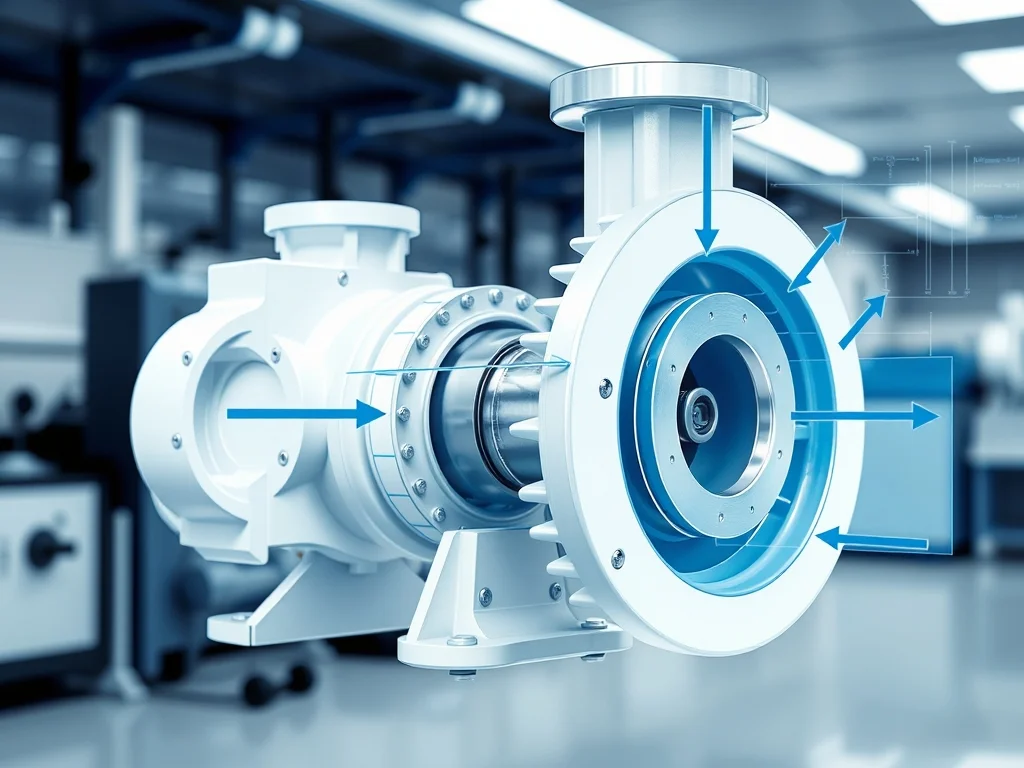
NPSH (Net Positive Suction Head) Explained — Why Your Pump is Cavitating
Net Positive Suction Head (NPSH) is the pressure available at the pump's suction inlet, expressed as the height of liquid column. If the available NPSH is too low, the liquid flashes to vapour inside the impeller — a destructive phenomenon called cavitation. Understanding NPSH is the difference between a pump that lasts 15 years and one that fails in 18 months.
1. NPSHa vs NPSHr — The Two Numbers You Need
- NPSHa (Available): The pressure your system actually provides at the pump inlet. This is a property of the installation.
- NPSHr (Required): The minimum pressure the pump needs to operate without cavitating. This is a property of the pump and is shown on its performance curve.
Golden rule: NPSHa must always be greater than NPSHr — preferably by a margin of 0.5–1.0 metres for safety.
2. How to Calculate NPSHa
NPSHa = (Atmospheric Pressure + Static Suction Head − Friction Losses − Vapour Pressure)
All values are expressed in metres of liquid column. Example for water at 25°C at sea level:
- Atmospheric pressure = 10.33 m
- Static suction head = +2 m (liquid above pump) or −3 m (liquid below pump)
- Friction loss in suction pipe = 1.2 m
- Vapour pressure of water at 25°C = 0.32 m
For a flooded suction installation: NPSHa = 10.33 + 2 − 1.2 − 0.32 = 10.81 m
If the pump's NPSHr is 3.5 m, your margin is 7.31 m — comfortable.
3. Common Reasons NPSHa Drops Below NPSHr
- Suction lift too high: Pump installed too far above liquid level
- Long, narrow, or restricted suction pipe: Friction losses eat into the margin
- Hot liquid: Vapour pressure rises sharply with temperature
- Clogged strainer or foot valve: Adds friction loss
- Altitude: Atmospheric pressure decreases at higher altitudes (1 m loss per 1000 m elevation)
- Volatile liquids: Petrol, solvents, hot condensate have high vapour pressure
4. Symptoms of Inadequate NPSH
- Crackling sound like gravel passing through the pump
- Erratic discharge pressure
- Reduced flow despite normal speed
- Impeller pitting and erosion within months
- Mechanical seal failures, bearing damage from vibration
5. How to Fix Low NPSHa
- Lower the pump closer to the liquid surface, or raise the source tank
- Increase suction pipe diameter (one size up) to cut friction losses
- Shorten and straighten the suction line — eliminate elbows, valves, reducers
- Cool the liquid if possible (reduces vapour pressure)
- Switch to a low-NPSHr pump — multi-stage or inducer-fitted models have lower NPSHr
- Add a booster pump to pressurise the suction side
6. Practical Margin Recommendations
For long-term reliability, aim for these NPSHa over NPSHr margins:
- Cold water pumps: NPSHa ≥ NPSHr + 0.5 m
- Hot water (>60°C): NPSHa ≥ NPSHr + 1.0 m
- Volatile liquids: NPSHa ≥ NPSHr + 1.5 m
- Critical-duty pumps: NPSHa ≥ 1.5× NPSHr
Bombay Engineering Syndicate has supplied pump solutions across India since 1957. Our application engineers help calculate NPSH margins, select pumps that match your suction conditions, and recommend installation corrections when existing systems suffer cavitation damage. Contact us for free NPSH consultation and Crompton pump sizing for your application.