
Single Phase vs Three Phase Motors: When to Choose Which
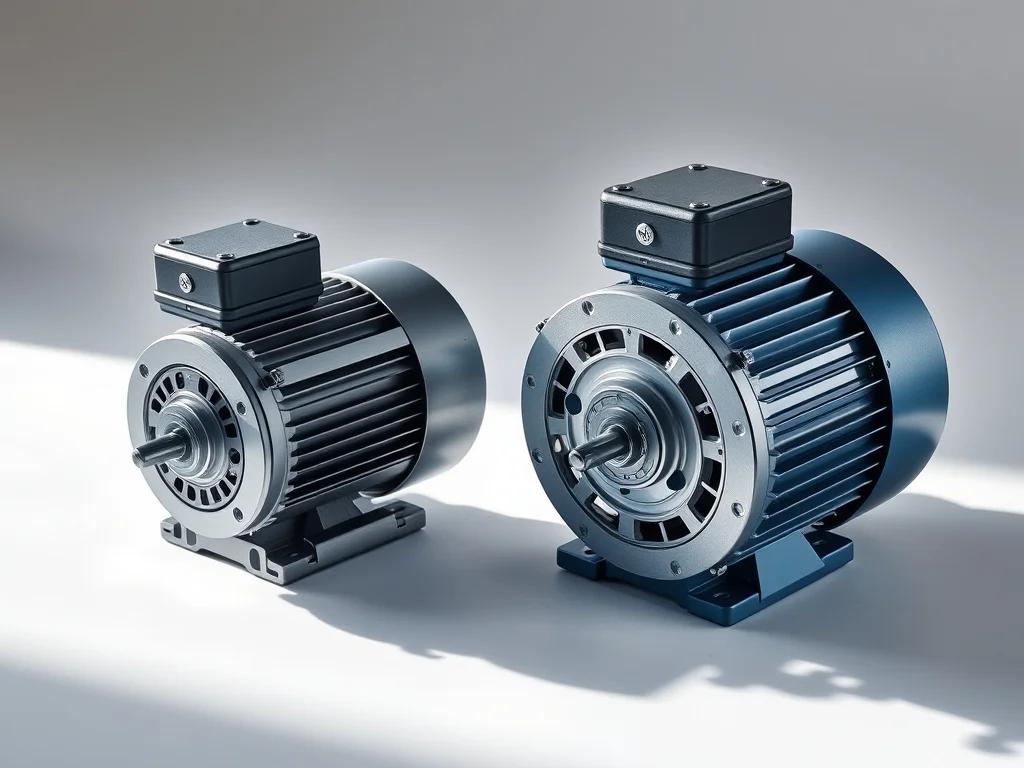
Single Phase vs Three Phase Motors: When to Choose Which
The first question when specifying any electric motor is: single-phase or three-phase? The answer affects the wiring, the cost, the available power range, and the application. This guide explains the technical and practical differences so you choose the right motor for your project.
1. The Basic Difference
A single-phase motor runs from a single AC waveform (typically 230 V in India). It needs a starting mechanism — a capacitor or auxiliary winding — because a single AC phase alone cannot create the rotating magnetic field a motor requires to start spinning.
A three-phase motor runs from three AC waveforms that are 120° apart (typically 415 V line-to-line in India). The three phases naturally create a rotating magnetic field, so the motor self-starts without any auxiliary mechanism.
2. Power Range — Where Each Makes Sense
- Single-phase: Practical up to about 2.2 kW (3 HP). Beyond this, the motors get expensive, inefficient, and produce poor starting torque.
- Three-phase: Available from 0.18 kW (0.25 HP) all the way to 15 MW+. The clear choice above 2.2 kW; the more economical choice above 0.75 kW.
3. Supply Requirements
- Single-phase: Available at almost every household and small commercial connection in India. No special meter or upgrade needed.
- Three-phase: Requires a three-phase electrical service. Industrial and most commercial premises have this; residential premises usually don't. The electricity board can provide a three-phase connection for an additional cost.
4. Efficiency and Power Factor
- Single-phase motors: Typically 60–75% efficient with power factor 0.6–0.75. The capacitor and auxiliary winding add losses.
- Three-phase motors: Typically 80–95% efficient (IE2–IE4) with power factor 0.80–0.92. More energy-efficient at every power rating.
For motors running 8+ hours daily, the energy cost difference favours three-phase even after the initial setup cost.
5. Starting Torque
- Capacitor-start single-phase: ~3× full-load torque at start — good for compressors, pumps
- Capacitor-run single-phase: ~1× full-load torque — for fans, light loads
- PSC single-phase: Low starting torque — only for fans
- Three-phase: Typically 1.5–2.5× full-load torque — handles most loads without issue
6. Cost Comparison
For motors above ~0.75 kW, the three-phase motor itself is cheaper (less material, simpler design). However, you must add the cost of the three-phase connection if you don't already have one — typically ₹15,000–₹50,000 depending on location and distance from the nearest line.
Quick rule: if you'll use more than 5 kW of three-phase motor load, the connection pays back in 2–3 years through energy savings.
7. Where to Use Single-Phase
- Residential pumps up to 2 HP (almost all home borewell, monoblock, and booster pumps)
- Small workshop equipment — drill presses, bench grinders, small compressors
- Household appliances — washing machines, fans, mixers, coolers
- Small agricultural equipment in areas without three-phase supply
8. Where to Use Three-Phase
- Industrial machinery — lathes, milling machines, conveyors, CNCs
- Agricultural pumps above 3 HP — borewell and irrigation pumps
- HVAC equipment — AHUs, chiller pumps, cooling tower fans
- Compressors above 3 HP — air, refrigeration, process
- Any motor running long hours where energy efficiency matters
- Any application where speed control via VFD is needed
Bombay Engineering Syndicate stocks both single-phase and three-phase Crompton motors across the full power range — from 0.18 kW household appliance motors to 15 MW HV industrial motors. Our team helps you decide which supply type fits your application and budget, especially when planning new installations where the three-phase connection is an option. Contact us for sizing and selection support.