
Solar Pump Systems: Components, Sizing & ROI for Indian Users
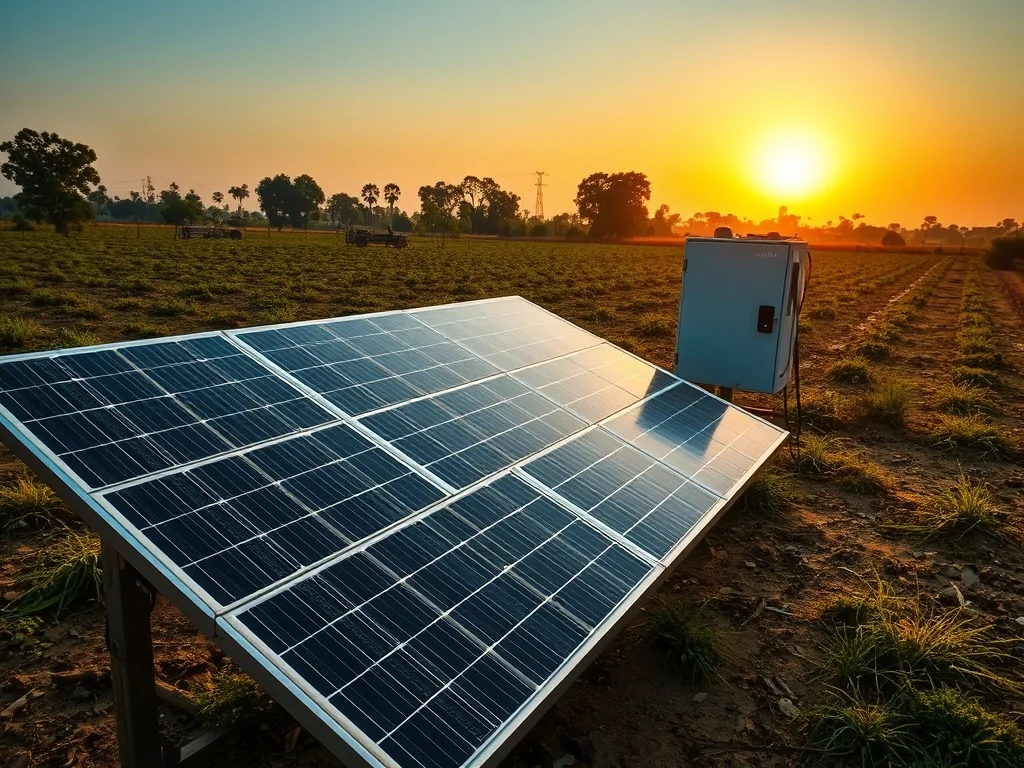
Solar Pump Systems: Components, Sizing & ROI for Indian Users
Solar pump systems are transforming Indian agriculture. By replacing diesel engines and grid-powered electric motors with solar-powered DC or AC pumps, farmers cut operating costs to nearly zero while reducing carbon emissions and grid load. The Government of India's PM-KUSUM scheme provides subsidies of 60–90% making these systems accessible to smallholders. This guide explains the components, sizing, and economics.
1. System Components
- Solar PV panels: Convert sunlight to DC power. Sized in Wp (watt-peak) at standard test conditions. Polycrystalline (cheaper) or monocrystalline (~15-20% more efficient, more compact).
- Solar pump controller (or inverter): For DC pumps, a controller manages MPPT (Maximum Power Point Tracking). For AC pumps, an inverter converts DC to variable-frequency AC.
- Pump: DC submersible (for direct-drive simplicity) or AC submersible (with VFD-style inverter — more flexible).
- Mounting structure: Galvanised steel or aluminium frame, designed for wind loading, with anti-theft fastenings.
- Cabling and accessories: Solar-grade DC cabling, surge protection, isolators.
- Optional: Battery backup (most agricultural systems skip this to cut cost — pump runs only when sun shines).
2. AC vs DC Solar Pumps
- DC solar pumps: Simpler — panels feed pump directly via MPPT controller. More efficient at low irradiance. Limited to ~5 HP. Best for shallow borewells and small farms.
- AC solar pumps (with inverter): More flexible — same pump works on solar or grid. Power range from 1 to 100+ HP. Standard induction motors are easier to repair locally. Preferred for large irrigation systems.
3. Sizing — A Practical Methodology
The water requirement, total dynamic head, and sunlight hours determine the system size.
Step 1: Calculate water demand in litres per day. E.g., 1 acre of paddy in summer ≈ 50,000 L/day. Drip irrigation for 5 acres ≈ 25,000 L/day.
Step 2: Determine TDH from source level to discharge point + friction losses.
Step 3: Available pumping hours per day = 5–6 (effective full-sun equivalent in most of India).
Step 4: Required flow rate = daily water / pumping hours.
Step 5: Pump hydraulic power (kW) = (Flow LPS × TDH m × 9.81) / 1000.
Step 6: Pump shaft power = hydraulic power / pump efficiency (typically 0.5–0.7).
Step 7: Solar panel size (Wp) = pump shaft power (kW) × 1300 (allowing for panel-to-pump efficiency losses of ~25%).
4. Worked Example — 3 HP Solar Borewell Pump
- Water demand: 30,000 L/day for vegetable farming (1.5 acres)
- Borewell depth to water = 30 m; tank height = 5 m; friction = 5 m → TDH = 40 m
- 5 pumping hours/day → required flow = 6,000 L/hr = 1.67 LPS
- Hydraulic power = (1.67 × 40 × 9.81) / 1000 = 0.66 kW
- Shaft power = 0.66 / 0.55 = 1.2 kW
- Pump rating: nearest standard is 1.5 kW (2 HP)
- Solar panel size: 1.5 × 1300 = 1,950 Wp → use 2,000 Wp (e.g., 5× 400 Wp panels)
5. PM-KUSUM Scheme & Subsidies
Under PM-KUSUM (Pradhan Mantri Kisan Urja Suraksha evam Utthaan Mahabhiyan):
- Component A: Solar farms 0.5–2 MW for grid sale
- Component B: Stand-alone solar pumps for off-grid farmers — 60–90% subsidy (central + state)
- Component C: Solarisation of existing grid-connected pumps — net metering allowed
Effective farmer cost for a 5 HP solar pump system often drops to ₹50,000–₹70,000 after subsidy, versus ~₹3–4 lakh unsubsidised.
6. Return on Investment
For a typical 5 HP agricultural pump replacing diesel:
- Diesel pump operating cost: ~₹300–₹500/day at current prices
- Diesel annual cost (4 months of pumping): ~₹40,000–₹60,000
- Solar pump operating cost: ~₹0 (panels last 25 years)
- Payback period after subsidy: 1.5–2 years
- Lifetime ROI (25-year panel life): 8–12×
7. Maintenance & Lifespan
- Solar panels: 25-year output warranty; clean monthly with water
- Pump and motor: same as conventional — 7–12 year lifespan, depends on water quality
- Controller/inverter: 7–10 years; warrantied 2–5 years
- Cabling, structure: 15+ years
Bombay Engineering Syndicate supplies Crompton solar pump kits — pumps, controllers, panels, and mounting structures — for farmers and agricultural contractors across Maharashtra, Gujarat, and pan-India. Our team helps with PM-KUSUM subsidy applications, system sizing, and installation through certified partners. Contact us for solar pump quotations and free site assessment.