
Choosing the Right Pump for Agricultural Irrigation
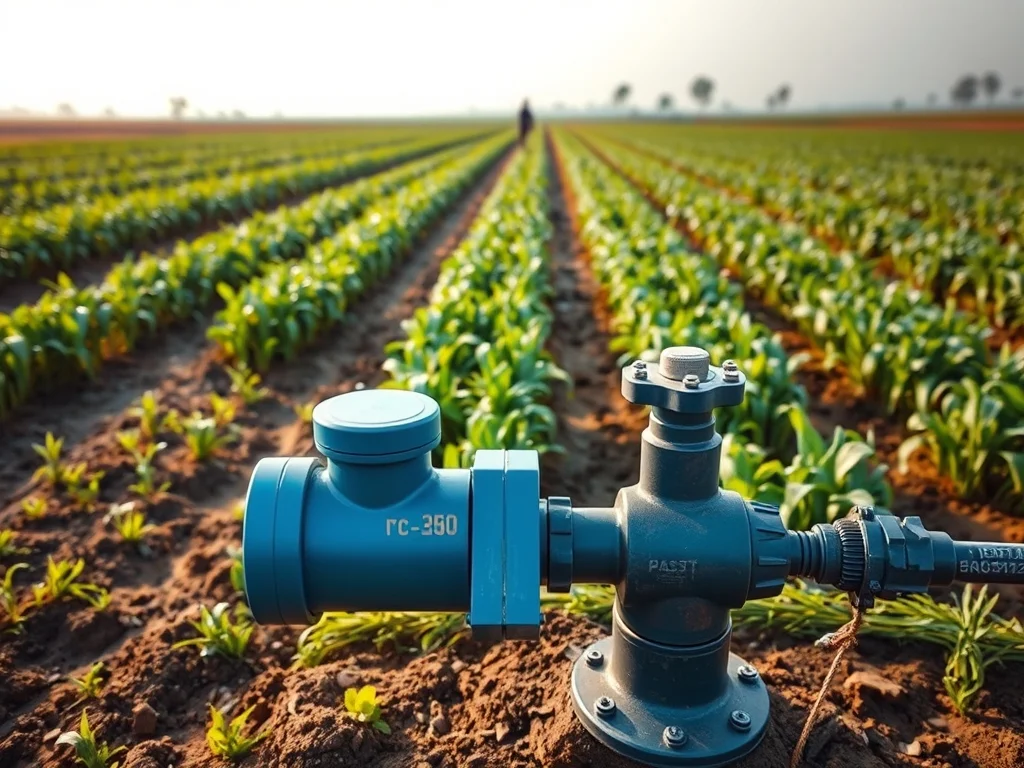
Choosing the Right Pump for Agricultural Irrigation
Selecting the right irrigation pump is one of the most important decisions for any Indian farmer. The pump determines water availability, energy bills, lifespan, and crop yield. With proper selection, a single pump can serve a farm for 15+ years. With wrong selection, you face daily breakdowns, low yield, and high power bills. This guide walks through the practical decision factors.
1. Identify Your Water Source
- Borewell: Submersible pump (3", 4", or 6" diameter depending on casing) — most common for groundwater extraction
- Open well: Surface monoblock pump with suction pipe (limited to ~7 m suction lift) or vertical openwell submersible pump
- River/canal/pond: Surface centrifugal pump with foot valve and strainer
- Storage tank to drip system: Booster pump or small centrifugal
2. Determine Water Demand by Crop
Typical daily water requirement per acre during peak season (rule of thumb):
- Paddy (flooded): 75,000 L/day/acre
- Sugarcane: 50,000 L/day/acre
- Cotton: 40,000 L/day/acre
- Wheat: 35,000 L/day/acre
- Vegetables (open field): 30,000 L/day/acre
- Drip-irrigated horticulture: 15,000 L/day/acre
- Drip on vegetables: 10,000 L/day/acre
3. Calculate Required Pump Capacity
Required flow rate = Daily water demand / Daily pumping hours
Practical daily pumping hours: 6–8 hours for grid-connected farms (matching power supply slots), 5–6 hours for solar (full-sun equivalent).
Example: 5 acres of cotton needing 40,000 L/day/acre = 200,000 L/day. At 7 hr pumping = 28,571 L/hr = 7.9 LPS.
Need a pump delivering at least 8 LPS at your total head.
4. Calculate Total Dynamic Head (TDH)
- For borewell submersible: Dynamic water level + delivery pipe friction + overhead tank height (if any) + 10% margin
- For monoblock from open well: Suction lift + delivery height + friction
- For surface centrifugal at canal: Suction lift + delivery height + friction
Typical TDH ranges:
- Shallow borewell (water <30 m): 35–50 m
- Medium borewell (30–60 m): 60–90 m
- Deep borewell (60–150 m): 100–180 m
- Open well + drip system: 25–40 m
5. Pump Sizing Examples
Case A — Sugarcane farm, deep borewell: 5 acres × 50,000 L/day = 250,000 L/day. Borewell dynamic level 80 m, delivery to overhead tank 6 m. TDH ≈ 100 m. Required flow at 8 hr = 8.7 LPS. Pump: 7.5 HP three-phase submersible at 100 m head.
Case B — Vegetable farm with drip irrigation: 2 acres × 10,000 L/day = 20,000 L/day. Open well, dynamic level 5 m, delivery to drip header tank 8 m. TDH ≈ 18 m. Required flow at 4 hr = 1.4 LPS. Pump: 1.5 HP single-phase monoblock.
Case C — Paddy farmer with shallow borewell: 3 acres × 75,000 L/day = 225,000 L/day. Borewell dynamic level 25 m, no overhead tank. TDH ≈ 35 m. Required flow at 8 hr = 7.8 LPS. Pump: 5 HP three-phase submersible at 40 m head.
6. Choosing Between AC and DC Solar Pumps
- DC solar pump: Best up to 5 HP; simpler system; higher efficiency at low irradiance; limited to dedicated solar use
- AC solar pump (with inverter): Works on solar AND grid; standard induction motor; preferred for 5 HP and above
Under PM-KUSUM scheme, both qualify for 60–90% subsidy. See our separate solar pump guide for details.
7. Energy Cost Comparison
For a 5 HP pump running 6 hr/day, 200 days/year:
- Diesel pump: ~4 L/hr × ₹95/L × 1200 hr = ₹4.5 lakh/year
- Grid-electric (₹2/kWh subsidised): 3.7 kW × 1200 hr × ₹2 = ₹8,880/year
- Grid-electric (unsubsidised ₹8/kWh): 3.7 kW × 1200 hr × ₹8 = ₹35,520/year
- Solar pump (after install): ₹0/year
8. Pump Selection Decision Tree
- Single-phase supply only? → Stick to 1–3 HP single-phase pumps
- Three-phase available? → Use three-phase for anything above 2 HP (cheaper, more efficient)
- Daytime power only? → Solar pump worth considering, especially if grid is unreliable
- Borewell yield < pump capacity? → Choose smaller pump matched to yield (oversizing causes dry-running)
- Hard water / sandy water? → Stainless-steel impeller versions; otherwise standard cast iron
- Frequent power cuts? → Voltage stabiliser + dry-run protector are essential
9. After-Sales Considerations
- Warranty: Crompton agricultural pumps typically 24 months
- Local service: Check that authorised service is available within 50 km
- Spare parts: Standard model = parts available; obscure model = months of waiting
- BIS/MNRE certification: Required for subsidy claims and rebates
Bombay Engineering Syndicate supplies the complete Crompton agricultural pump range — single-phase and three-phase, submersible and surface, AC and DC solar versions. Our team helps you size the right pump based on borewell yield report, crop, and acreage. We support PM-KUSUM solar subsidy applications and provide pan-India delivery through our Mumbai and Ahmedabad warehouses. Contact us for free pump sizing and quotation.